" height="15.65460401053985px" id="E2hITFMIY" width="89px"/><path d="M 15.154 0 L 6.296 0 C 5.965 0 5.657 0.167 5.473 0.446 C 5.289 0.725 5.255 1.078 5.38 1.389 C 5.43 1.511 5.504 1.621 5.598 1.714 C 5.783 1.903 6.034 2.01 6.296 2.01 L 13.158 2.01 C 12.949 3.493 12.28 4.868 11.247 5.936 L 11.198 5.987 L 11.149 6.037 C 10.099 7.086 8.747 7.765 7.29 7.977 C 5.94 8.177 4.562 7.968 3.329 7.374 C 2.634 7.038 1.998 6.588 1.447 6.041 L 1.398 5.99 L 0 7.414 C 0.221 7.641 0.455 7.854 0.699 8.054 C 0.908 8.224 1.126 8.39 1.351 8.542 C 1.967 8.962 2.632 9.301 3.332 9.552 C 3.972 9.784 4.637 9.938 5.312 10.013 C 5.971 10.089 6.635 10.089 7.293 10.013 C 8.711 9.856 10.07 9.353 11.254 8.545 C 11.739 8.214 12.192 7.837 12.605 7.417 C 12.829 7.192 13.039 6.954 13.235 6.703 C 13.405 6.492 13.563 6.272 13.711 6.044 C 14.506 4.84 15.001 3.458 15.155 2.016 C 15.192 1.682 15.21 1.346 15.21 1.01 C 15.209 0.673 15.19 0.335 15.155 0 Z" fill="rgb(8, 46, 57)" height="10.070297475553705px" id="SUqhhb7Az" transform="translate(2.507 7.93)" width="15.210335938094289px"/></g></g></svg>)
Issue Management
Your issues deserve a record. Not a WhatsApp group.

In the warehouse, most of what goes wrong never gets seen beyond the person who spotted it.
A damaged pallet gets mentioned in a WhatsApp group. A missing label is discussed at the loading dock and never written down. A shortage is flagged over the phone to the office, resolved in the moment, and forgotten by the next shift.
Each of these things is small on its own. But together, they add up to a picture of the operation that no one ever gets to see. The warehouse is running on knowledge that lives only in people's heads and in scattered messages that scroll away.
That's the gap Issue Management closes. It gives every deviation, big or small, a record the whole team can see, measure, and improve from. Because you can't improve what you don't record.
What is Issue Management
Cargosnap Issue Management is the shared space where every damage, missing cargo, and mismatched data gets captured with context, assigned to the right people, and closed faster. It sits inside the same platform your team already uses for inspections and shipment records, so every deviation lives against the correct file reference, from the moment it's spotted on the floor to the moment it's closed in the office.
For Logistics Engineers and Operational Managers who manage deviations in their material handling process, Issue Management turns fragmented conversations into structured operational tasks. Not another chat channel. Not another spreadsheet. A shared operational record.
How it works
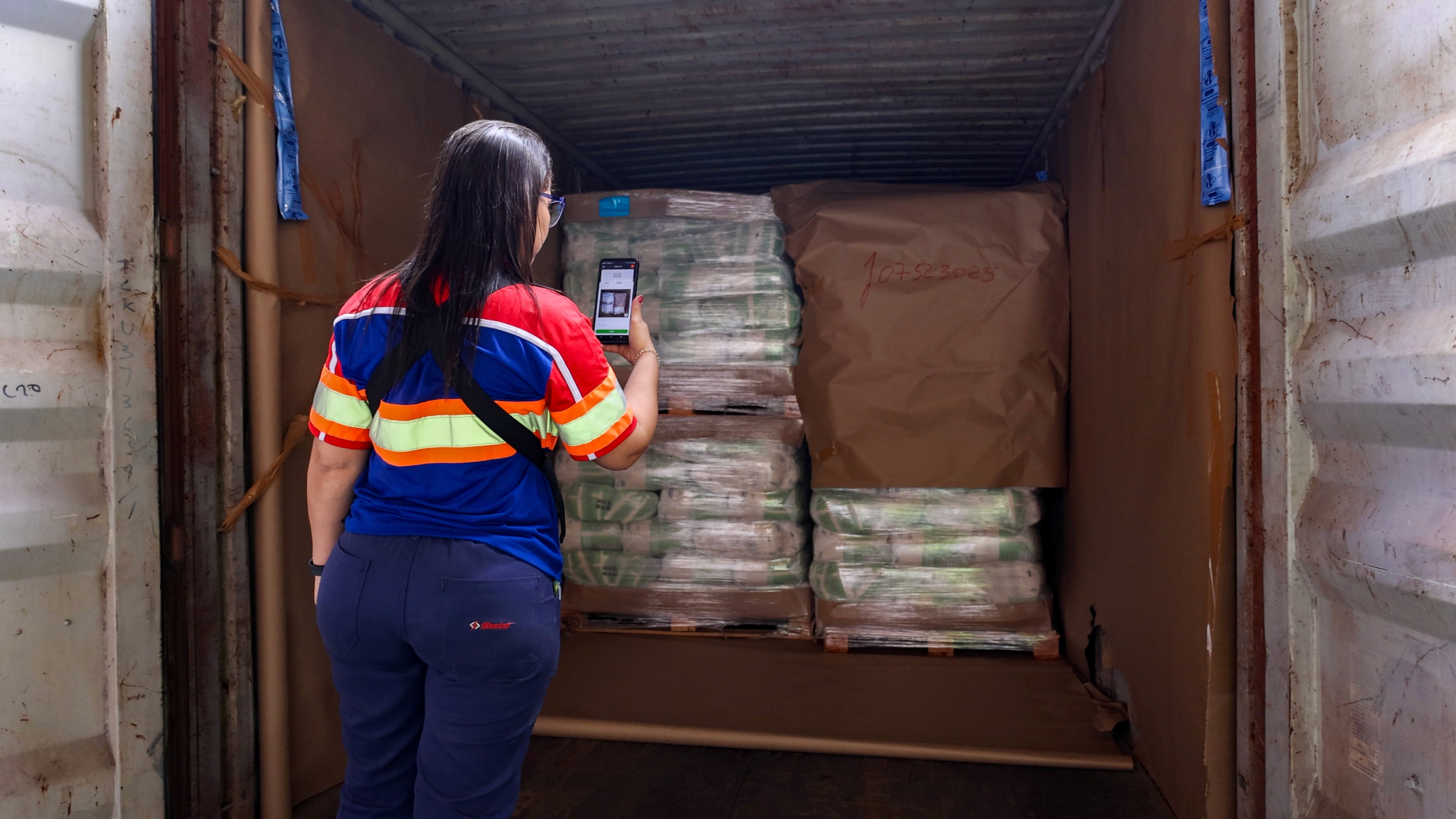
Log the issue on the floor. The warehouse spots a deviation and logs it in the mobile app during an inspection. Photo, location, category, and timestamp- all automatically referenced to the correct shipment. And of course, the right team or person is also automatically assigned to the issue.
Coordinate from the office. At the office, you see every issue the moment it's created, with the right context attached. Assign ownership, notify the right people, add notes, and coordinate the response without leaving the record.
Close it and find it anytime. Every action, message, and decision stays linked to the shipment. When the issue is closed, the full history is preserved. Ready for claims, audits, customer disputes, or root cause review.
Use it for any deviation
Issue Management is built to handle whatever the material handling process throws at it. The most common deviations our customers capture:
Cargo damage. Broken pallets, crushed cartons, dented containers, or damage to the truck itself.
Lost and found. Missing cargo, misplaced pallets, or items that turn up without a matching shipment.
Missing labels. Cartons or pallets arriving without labels, with the wrong label, or with labels too damaged to scan.
Missing order numbers. Cargo arriving or leaving without a matching order or reference number to file it against.
Damaged equipment. Broken pallets, faulty forklifts, damaged trailers, or yard equipment out of service.
Every one of these ends up on the same structured record, against the same file reference, ready to be assigned and closed.
What changes when issues live in one place
The cost of scattered communication isn't just slower resolution. It's delayed customer responses, a weaker position against claims, and exceptions that quietly repeat because no one has the data to see the pattern.
Issue Management changes that in four ways.
Real-time visibility from floor to office. The moment an issue is logged from the mobile app, the office sees it. No phone calls, no forwarded WhatsApp screenshots, no waiting for the end-of-shift handover.
Structured documentation from the moment of capture. Each issue is automatically linked to the correct file reference, categorized, timestamped, and documented with photos and context. The record is admissible for claims, audits, and customer disputes from the first second.
Faster resolution with the right people on the record. Decisions get made once, with the full picture attached. No repeated loops between the warehouse, the office, and the customer just to gather the basic facts.
Root cause analysis becomes possible. Every issue becomes structured data. Logistics engineers and quality managers can finally see where, for whom, and why issues happen most often. And fix the cause instead of the symptom.