" height="15.65460401053985px" id="E2hITFMIY" width="89px"/><path d="M 15.154 0 L 6.296 0 C 5.965 0 5.657 0.167 5.473 0.446 C 5.289 0.725 5.255 1.078 5.38 1.389 C 5.43 1.511 5.504 1.621 5.598 1.714 C 5.783 1.903 6.034 2.01 6.296 2.01 L 13.158 2.01 C 12.949 3.493 12.28 4.868 11.247 5.936 L 11.198 5.987 L 11.149 6.037 C 10.099 7.086 8.747 7.765 7.29 7.977 C 5.94 8.177 4.562 7.968 3.329 7.374 C 2.634 7.038 1.998 6.588 1.447 6.041 L 1.398 5.99 L 0 7.414 C 0.221 7.641 0.455 7.854 0.699 8.054 C 0.908 8.224 1.126 8.39 1.351 8.542 C 1.967 8.962 2.632 9.301 3.332 9.552 C 3.972 9.784 4.637 9.938 5.312 10.013 C 5.971 10.089 6.635 10.089 7.293 10.013 C 8.711 9.856 10.07 9.353 11.254 8.545 C 11.739 8.214 12.192 7.837 12.605 7.417 C 12.829 7.192 13.039 6.954 13.235 6.703 C 13.405 6.492 13.563 6.272 13.711 6.044 C 14.506 4.84 15.001 3.458 15.155 2.016 C 15.192 1.682 15.21 1.346 15.21 1.01 C 15.209 0.673 15.19 0.335 15.155 0 Z" fill="rgb(8, 46, 57)" height="10.070297475553705px" id="SUqhhb7Az" transform="translate(2.507 7.93)" width="15.210335938094289px"/></g></g></svg>)
Damage claims
Why cargo damage claims get denied and how to prevent it
Cargo damage claims get denied most often because of missing or unstructured documentation, not because the damage did not happen. Carriers, insurers, and clients require specific evidence captured at specific moments to validate a claim. When that evidence is absent, incomplete, or untraceable, the claim fails regardless of whether the damage was real.
This guide explains the most common reasons claims are denied and what 3PL operations teams can do to prevent it.
The most common reasons cargo damage claims are denied
No damage notation on the proof of delivery
The proof of delivery is the single most critical document in any damage claim. If the receiving team signs the POD without noting visible damage, they are legally confirming the cargo arrived in acceptable condition. Once that signature is on the document, winning a claim against the carrier becomes extremely difficult.
Every visible irregularity, crushed packaging, forklift damage, missing seals, wet boxes, must be noted on the POD at the moment of delivery. Vague notations like "subject to inspection" are not sufficient in most jurisdictions and will not hold up against a carrier's legal team.
No timestamped photographic evidence
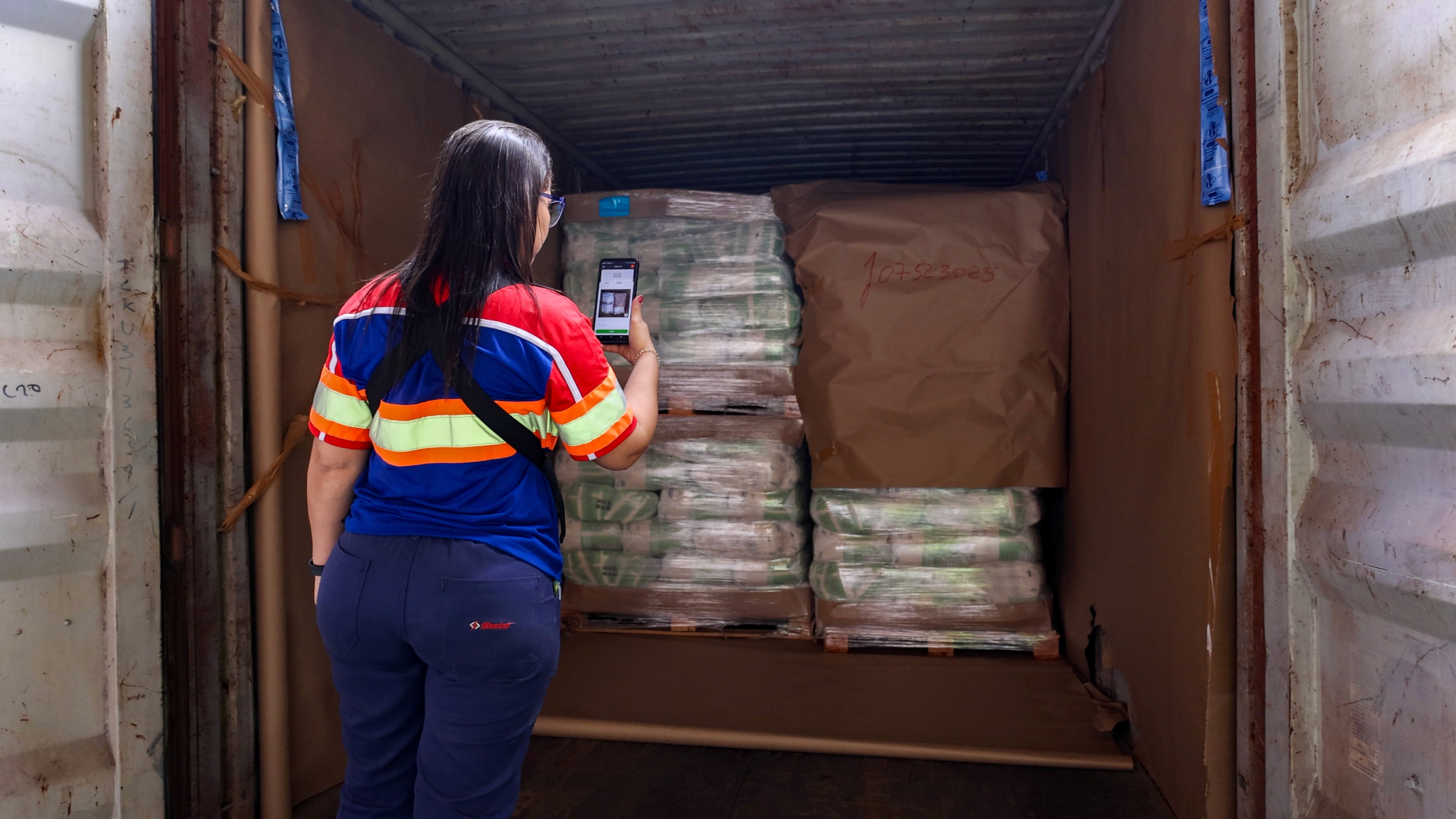
Photos taken hours or days after a delivery do not prove when the damage occurred. Carriers routinely challenge claims by arguing the damage happened after delivery. Without a timestamp that links a photo to the moment of handover, that argument is difficult to counter.
Photos need to be taken at the point of handover, linked to the specific shipment reference, and stored in a way that makes the timestamp verifiable. A photo on someone's phone or in a WhatsApp group does not meet this standard.
No link between the inspection and the shipment
An inspection report that cannot be connected to a specific bill of lading, container number, or CMR document has limited legal value. Claims adjusters need to match the evidence to the movement. If your inspection records exist in a separate system or on paper, that connection is often impossible to prove.
Every inspection record needs to reference the shipment it belongs to. This means the container number, vehicle registration, bill of lading reference, and any other relevant document identifiers need to be captured alongside the inspection itself.
Late reporting
Most carriers impose strict deadlines for filing damage claims. For visible damage, the standard window is typically 24 to 48 hours from delivery. For concealed damage, damage that is only discovered after unpacking, most carriers allow up to 5 to 7 days, but require written notification immediately upon discovery.
Missing these deadlines is one of the most common and preventable reasons claims are denied. By the time the paperwork reaches whoever is responsible for filing, the window has often already closed.
Incomplete documentation package
A complete damage claim requires multiple documents working together. Most teams submit whatever they have rather than what is needed. A claim without all of the following is likely to be challenged:
The bill of lading confirms that the cargo was accepted by the carrier in good condition. The proof of delivery with damage notated at the time of receipt. Timestamped photographs showing the damage in context. An inspection report linked to the specific shipment. A commercial invoice establishing the value of the damaged goods. Written notification to the carrier within the required timeframe.
Missing any one of these weakens the claim significantly.
What concealed damage claims require
Concealed damage, damage that is not visible until after unpacking, is harder to win because the evidence window is narrow and the burden of proof is higher.
To successfully file a concealed damage claim you need to establish that the cargo was in good condition when it was received by the carrier, that it was handled correctly after delivery, and that the damage could only have occurred during transit.
This requires a condition record at the point of loading that shows the cargo left in good condition. It requires the packaging to be preserved until an inspector has seen it. And it requires written notification to the carrier as soon as the damage is discovered, not after the weekend.
The underlying problem: material handling is invisible by default
Most damage claims fail not because the damage was disputed but because the documentation process was not designed to produce evidence. Teams do their best with the tools they have, phones, WhatsApp, paper checklists, email threads. But informal processes create informal records, and informal records do not hold up in formal disputes.
The reason documentation fails in most 3PL operations is not a training problem or a motivation problem. It is a visibility problem. Material handling, the loading, unloading, inspection, and handover of cargo, is the one area of logistics operations that produces almost no structured data by default. Every other part of the supply chain has a system. ERPs track orders. WMSs track inventory. TMSs track transport. But what actually happens when cargo is physically handled, who checked it, in what condition, at exactly what moment, happens between the systems. It leaves no record unless someone deliberately creates one.
The operations that consistently win damage claims have one thing in common: they capture proof as a process, not as a reaction. Every handling moment produces a structured, timestamped, traceable record automatically, regardless of who is on shift. When a claim is opened, the evidence is already there. There is nothing to reconstruct.
How to prevent damage claim denials: a practical checklist
Train every team member to note visible damage on the POD before signing, no exceptions.
Take photographs at the point of handover, not after. Link every photo to a shipment reference at the time it is taken.
Use a structured inspection checklist that captures container number, vehicle registration, bill of lading reference, condition of seals, and condition of cargo at loading and unloading.
Store all inspection records digitally with an automatic timestamp and a link to the shipment they belong to.
Set an internal alert for concealed damage reporting. Teams should be trained to inspect and report within 24 hours of delivery.
Keep all original packaging until a claim is resolved. Disposing of damaged goods before an inspector has seen them can invalidate the claim entirely.
Assign a single person responsible for filing claims within the required window. The documentation process can be distributed but the filing responsibility must be owned.
The bottom line
Cargo damage claims get denied because carriers and insurers require structured, traceable evidence and most 3PL operations are not built to produce it consistently. The fix is not administrative. It is operational. Material handling needs to become visible, and the evidence needs to be created at the moment the cargo is handled, not assembled after a dispute is already open.