" height="15.65460401053985px" id="E2hITFMIY" width="89px"/><path d="M 15.154 0 L 6.296 0 C 5.965 0 5.657 0.167 5.473 0.446 C 5.289 0.725 5.255 1.078 5.38 1.389 C 5.43 1.511 5.504 1.621 5.598 1.714 C 5.783 1.903 6.034 2.01 6.296 2.01 L 13.158 2.01 C 12.949 3.493 12.28 4.868 11.247 5.936 L 11.198 5.987 L 11.149 6.037 C 10.099 7.086 8.747 7.765 7.29 7.977 C 5.94 8.177 4.562 7.968 3.329 7.374 C 2.634 7.038 1.998 6.588 1.447 6.041 L 1.398 5.99 L 0 7.414 C 0.221 7.641 0.455 7.854 0.699 8.054 C 0.908 8.224 1.126 8.39 1.351 8.542 C 1.967 8.962 2.632 9.301 3.332 9.552 C 3.972 9.784 4.637 9.938 5.312 10.013 C 5.971 10.089 6.635 10.089 7.293 10.013 C 8.711 9.856 10.07 9.353 11.254 8.545 C 11.739 8.214 12.192 7.837 12.605 7.417 C 12.829 7.192 13.039 6.954 13.235 6.703 C 13.405 6.492 13.563 6.272 13.711 6.044 C 14.506 4.84 15.001 3.458 15.155 2.016 C 15.192 1.682 15.21 1.346 15.21 1.01 C 15.209 0.673 15.19 0.335 15.155 0 Z" fill="rgb(8, 46, 57)" height="10.070297475553705px" id="SUqhhb7Az" transform="translate(2.507 7.93)" width="15.210335938094289px"/></g></g></svg>)
Material handling
What is a Material Handling Platform?
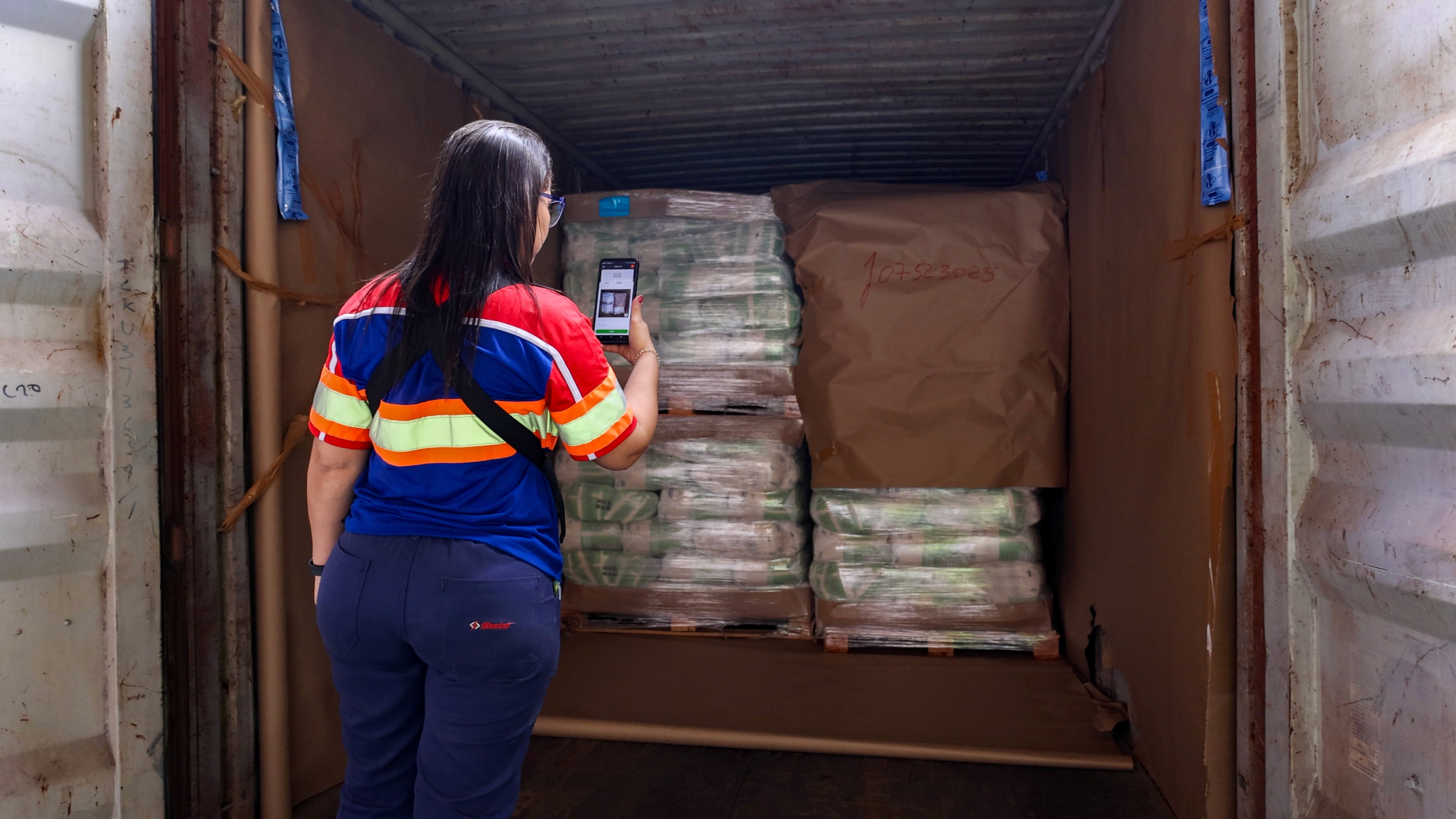
Material handling sits at the physical interface of logistics operations. It covers the movement, storage, inspection, packing, proofing, and handling of goods inside warehouses, terminals, and docks, and between logistics sites.
A material handling platform is software that helps teams record these events as they happen and turn them into structured data they can use to improve performance and prevent issues.
Guiding principle: a material handling platform becomes the system of record for what actually happened when material was handled.
What material handling includes
Movement (dock-to-stock, staging, put-away)
Storage (location moves, holds, quarantines)
Inspection (damage, packaging, compliance, quality checks)
Packing & proofing (materials used, proof-of-work, photos, checklists)
Handover events (door open, seal verification, payload transfer)
Exceptions (shortages, document errors, rework, claims evidence)
What a material handling platform does
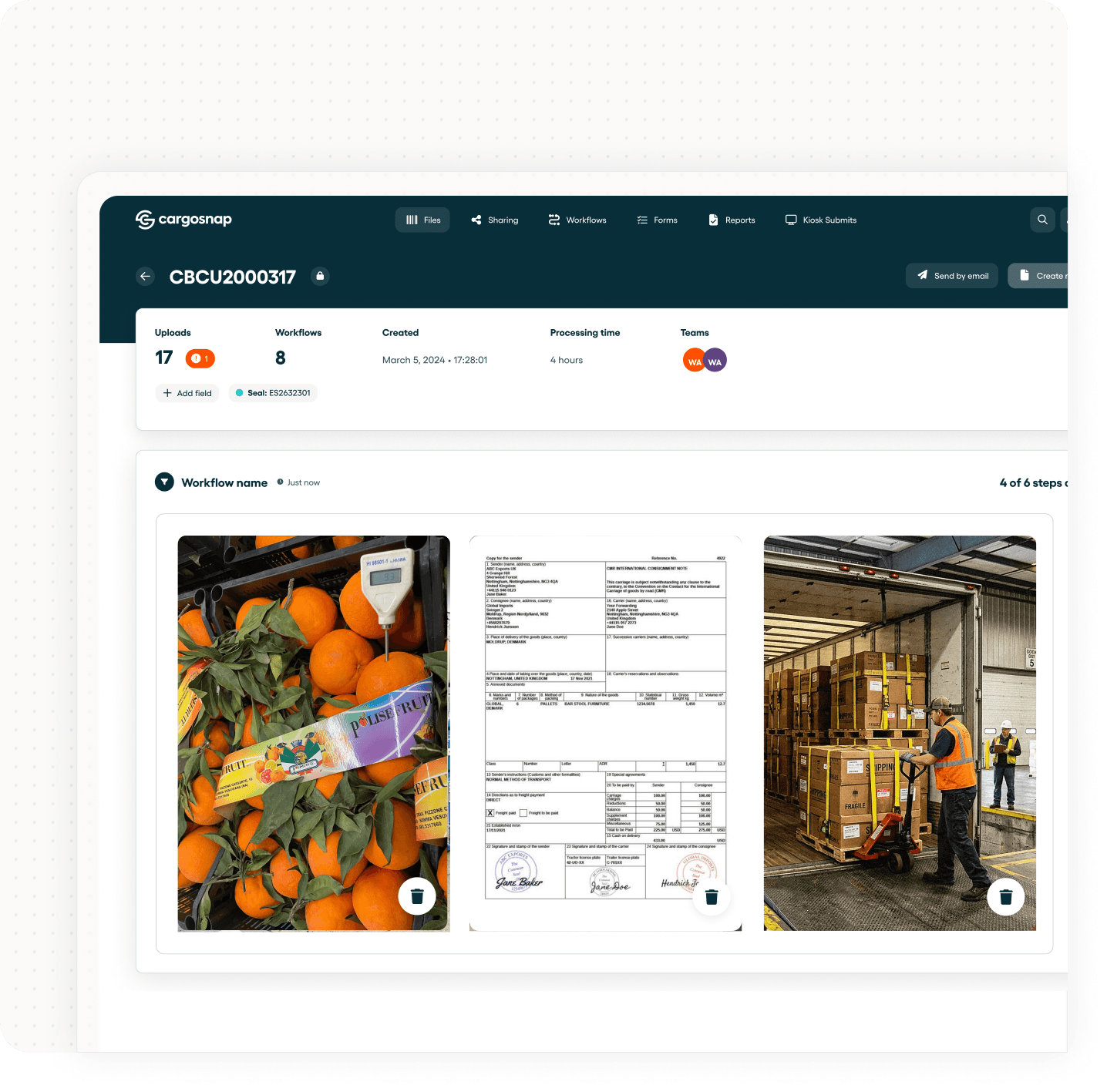
A material handling platform records physical execution as it happens and turns handling moments into measurable performance data. It captures movement, inspection, packing, proofing, and handovers in real time. It links scans, images, forms, timestamps, and anomalies to shipment context. It standardizes floor procedures and feeds reliable inputs to improvement loops.
Material Handling Platform vs WMS vs ERP vs BI
Each tool in the logistics stack tracks a different world; only the material handling platform tracks reality on the warehouse floor.
WMS: inventory locations and SKU transactions.
ERP/TMS: orders, planning, and transport schedules.
BI: pattern analysis from existing structured data.
Material Handling Platform: physical moments, conditions, and exceptions that other systems overlook.
Common use cases
These are practical scenarios where a material handling platform creates ground truth and daily insights.
inbound receiving and unloading proof
container seal verification at handover
damage and packaging inspection
document error checks (CMR, codes, lists)
internal staging, put-away, cross docking
labor time and materials tracking
claims evidence sharing across parties
Frequently asked questions
What data does it capture day-to-day?
The platform captures scans, forms, images, timestamps, hand-offs, and anomalies created during handling. It links these to shipment entities such as CMR, bill of lading, container codes, and packing lists. Every handling moment becomes a reliable input for reporting and continuous improvement.Can BI and control towers use this data?
BI tools reveal patterns from structured inputs. The material handling platform creates those inputs from deep node execution: scans, images, forms, timestamps, hand-offs, and anomalies. It feeds ground truth back to WMS and TMS so control towers can finally analyze what happened when goods were handled.How are handling events linked to shipments?
Handling moments are connected to shipment context across parties — LSP, shipper, warehouse, partner. Door opens, seal verification, payload transfer, and exceptions are tied to CMR and container codes. This creates accountability with a single system of record for what actually happened.Why this category matters for resilience and cost-to-serve
Material handling is the place where risks and variability are highest. This domain absorbs upstream disruptions such as tariff changes, delays, and staff turnover. A material handling platform unlocks performance data from these physical moments, enabling margin protection and true cost-to-serve visibility. Once handling becomes measurable, the supply chain gains a new lever for excellence.How does it reduce damages and rework?
Damages and rework decline when inspections are performed in the moment instead of later. The material handling platform standardizes damage assessment, preserves evidence, and prevents shortcuts under time pressure. Once handling moments become visible and measurable, inbound issues stop repeating and OTIF improves.Who is the primary user of a material handling platform?
The platform is primarly for Logistics Engineers, Operations Managers and anyone else who is interested in getting access into day to day operations, standardize work and of course at the end analyse all those moments that quietly impact cost, speed, and serviceIs this platform only for managers?
No. Operators use it to follow real-time workflows, while supervisors and directors use the outputs. Managers finally see what happened when material was handled and can measure quality, labor, and exceptions across teams, shifts and locations..Is it suitable for high staff turnover environments?
Yes. The interface is simple and visual so temporary contractors can perform standardized inspections and unloading procedures from day one, creating reliable handovers even in volatile teams.Can manufacturers and terminals also use it?
Yes. Any site where goods move between parties — manufacturer to LSP, terminal to shipper — can use the platform to capture the overlooked handover moments and their legal and commercial implications.Who should not consider it?
Teams looking only for transport routing or pure SKU inventory management should rely on TMS/ERP. A material handling platform complements those systems rather than replacing planning engines.