" height="15.65460401053985px" id="E2hITFMIY" width="89px"/><path d="M 15.154 0 L 6.296 0 C 5.965 0 5.657 0.167 5.473 0.446 C 5.289 0.725 5.255 1.078 5.38 1.389 C 5.43 1.511 5.504 1.621 5.598 1.714 C 5.783 1.903 6.034 2.01 6.296 2.01 L 13.158 2.01 C 12.949 3.493 12.28 4.868 11.247 5.936 L 11.198 5.987 L 11.149 6.037 C 10.099 7.086 8.747 7.765 7.29 7.977 C 5.94 8.177 4.562 7.968 3.329 7.374 C 2.634 7.038 1.998 6.588 1.447 6.041 L 1.398 5.99 L 0 7.414 C 0.221 7.641 0.455 7.854 0.699 8.054 C 0.908 8.224 1.126 8.39 1.351 8.542 C 1.967 8.962 2.632 9.301 3.332 9.552 C 3.972 9.784 4.637 9.938 5.312 10.013 C 5.971 10.089 6.635 10.089 7.293 10.013 C 8.711 9.856 10.07 9.353 11.254 8.545 C 11.739 8.214 12.192 7.837 12.605 7.417 C 12.829 7.192 13.039 6.954 13.235 6.703 C 13.405 6.492 13.563 6.272 13.711 6.044 C 14.506 4.84 15.001 3.458 15.155 2.016 C 15.192 1.682 15.21 1.346 15.21 1.01 C 15.209 0.673 15.19 0.335 15.155 0 Z" fill="rgb(8, 46, 57)" height="10.070297475553705px" id="SUqhhb7Az" transform="translate(2.507 7.93)" width="15.210335938094289px"/></g></g></svg>)
Guide
How to set up a Tender for Logistics Services

Most shippers only run a logistics tender once every few years, which is exactly why it goes wrong so often. The process gets improvised: a spreadsheet of rates, a handful of calls, a decision made mostly on price. Six months later, the provider that looked cheapest on paper turns out to be the one causing the most exceptions, delays, and disputes.
A tender is how you put structure around that decision. Done properly, it forces you to define what you actually need before you start comparing providers, and it gives every bidder the same information to respond to, so you're comparing like with like. Here's how to set one up.
Step 1: Define the scope before you define the criteria
Before writing a single requirement, get clear on what's actually being tendered. Is this the full transport and warehousing operation, or a single lane or service line? Are you replacing an incumbent or bringing in a new capability? What volumes, routes, and service levels are you working with today, and how do you expect them to change over the next two to three years?
This scope becomes the backbone of the tender. Every requirement, every evaluation criterion, and every question you ask bidders should trace back to it. Skip this step and you end up with a tender that reads like a wish list instead of a specification.
Step 2: Choose the right format
Not every sourcing exercise needs a full Request for Proposal. Three formats cover most situations:
An RFI (Request for Information) is useful when you're not yet sure who the credible providers even are, and you want to shortlist before asking anyone to invest time in a full response. An RFQ (Request for Quotation) works when the service is well defined and price is the main variable, such as a single lane with clear volumes. An RFP (Request for Proposal) is the right choice when you need providers to propose how they'd solve the problem, not just what it costs, because service model, technology, and account setup all matter to the outcome.
Most logistics tenders for an ongoing service relationship should be run as an RFP. It's the format that lets you evaluate capability, not just cost.
Step 3: Set requirements and evaluation criteria together
This is where most tenders lose rigor. Requirements get written first, then someone works out how to score them later, and the two never quite line up. Build them at the same time instead: for every requirement, decide upfront how you'll verify a bidder meets it and how much weight it carries in the final decision.
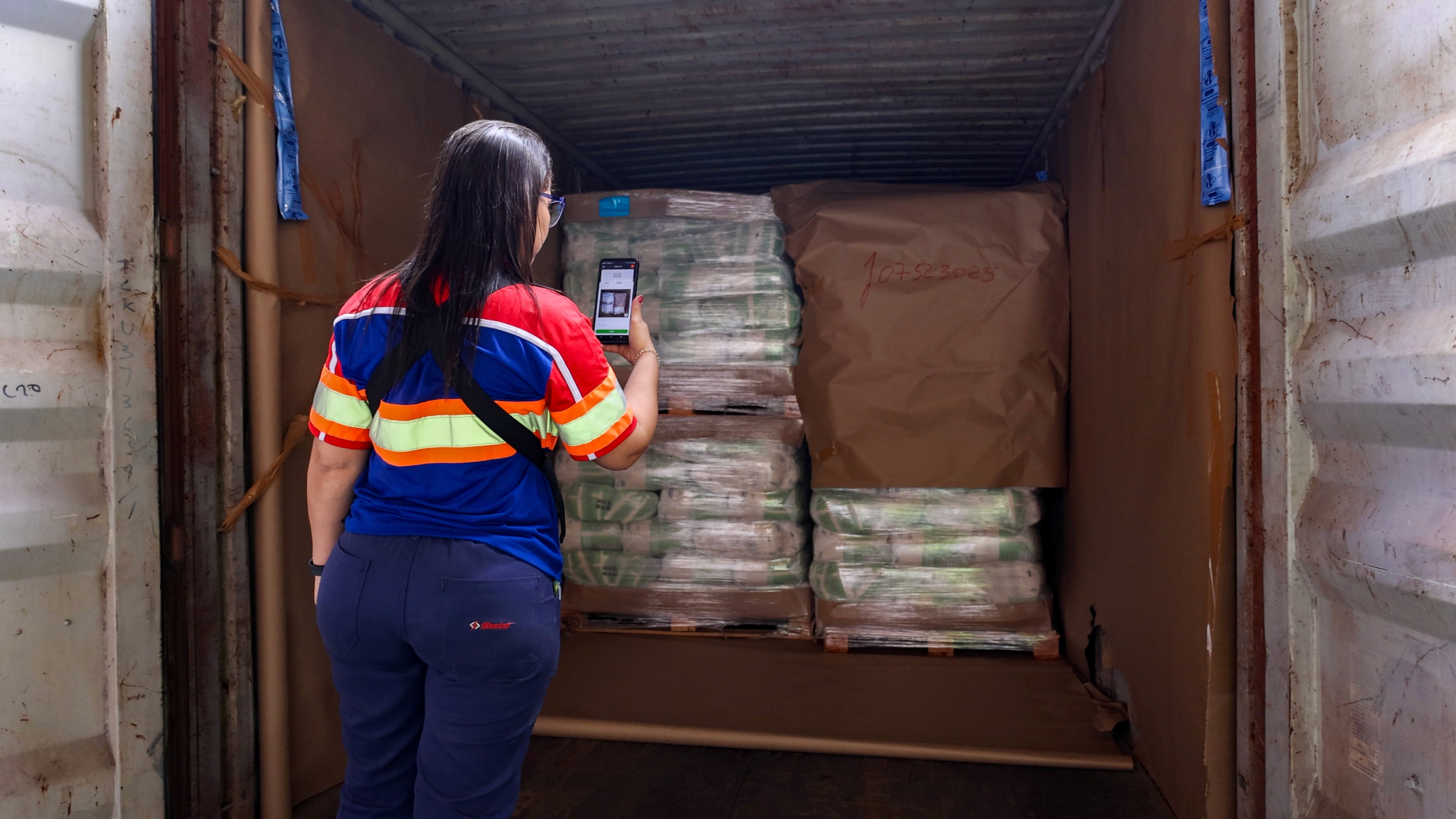
A well-built scorecard usually covers five areas: price and commercial terms, operational capability and network fit, compliance and insurance, references and financial stability, and visibility, inspections, and reporting. That last category is worth naming explicitly rather than folding into "operations," because it's the one shippers most often forget to ask about, and the one that causes the most friction later. Ask providers how they inspect cargo at pickup, in transit, and on delivery, not just at the final handover. A provider that only checks condition at the end has no record of where a deviation actually happened, which makes damage claims and disputes far harder to resolve. Ask how they document proof of delivery, how they handle damage and exceptions when they occur, and how much of that is visible to you in real time versus buried in someone's inbox after the fact. Some providers run this through a dedicated system, such as Cargosnap, that captures inspections and documentation at every handover point; others still do it on paper or over email. Either way, it's worth knowing before you sign, not after the first disputed claim. A provider who can't show you what happens to your freight while it's out of your hands is a provider you'll be chasing for updates for the life of the contract.
Weight the criteria before the proposals come in, not after. It's the only way to stop the final decision from quietly becoming "whoever was cheapest" by default.
Step 4: Brief bidders clearly and give everyone the same information
Send every bidder the same document, on the same timeline, with the same access to ask questions. If one provider gets a follow-up call and another doesn't, your comparison is already compromised. A short kickoff call or written Q&A round, open to all bidders and answered in writing to all of them, keeps the process fair and saves you from ambiguous responses later.
Give bidders enough time to respond properly. Two to three weeks is typical for an RFP of moderate complexity. Rushed timelines produce generic proposals that tell you very little about how a provider would actually perform.
Step 5: Score, shortlist, and verify
Score submissions against the criteria you set in Step 3, not against your gut reaction to the pricing page. Shortlist two or three providers for deeper conversations: a site visit, a reference call, a walkthrough of their systems. This is where claims made on paper get tested. If a provider says they offer full shipment visibility, ask to see it, not just hear about it.
Step 6: Contract with the details that were promised
Once you've selected a provider, make sure the requirements and commitments from the tender make it into the contract, not just the price. Service levels, reporting cadence, and any technology commitments should be written down, because they're the details that get quietly dropped once the deal is signed and the relationship moves into delivery.
Common mistakes to avoid
Tenders tend to go wrong in the same few ways: scope that's too vague to compare responses against, evaluation criteria decided after the fact to justify a decision already made, timelines too short for a fair response, and requirements that stop at "on time and on budget" without asking how a provider will prove it. Building your scope, criteria, and timeline deliberately, in that order, solves most of it.