" height="15.65460401053985px" id="E2hITFMIY" width="89px"/><path d="M 15.154 0 L 6.296 0 C 5.965 0 5.657 0.167 5.473 0.446 C 5.289 0.725 5.255 1.078 5.38 1.389 C 5.43 1.511 5.504 1.621 5.598 1.714 C 5.783 1.903 6.034 2.01 6.296 2.01 L 13.158 2.01 C 12.949 3.493 12.28 4.868 11.247 5.936 L 11.198 5.987 L 11.149 6.037 C 10.099 7.086 8.747 7.765 7.29 7.977 C 5.94 8.177 4.562 7.968 3.329 7.374 C 2.634 7.038 1.998 6.588 1.447 6.041 L 1.398 5.99 L 0 7.414 C 0.221 7.641 0.455 7.854 0.699 8.054 C 0.908 8.224 1.126 8.39 1.351 8.542 C 1.967 8.962 2.632 9.301 3.332 9.552 C 3.972 9.784 4.637 9.938 5.312 10.013 C 5.971 10.089 6.635 10.089 7.293 10.013 C 8.711 9.856 10.07 9.353 11.254 8.545 C 11.739 8.214 12.192 7.837 12.605 7.417 C 12.829 7.192 13.039 6.954 13.235 6.703 C 13.405 6.492 13.563 6.272 13.711 6.044 C 14.506 4.84 15.001 3.458 15.155 2.016 C 15.192 1.682 15.21 1.346 15.21 1.01 C 15.209 0.673 15.19 0.335 15.155 0 Z" fill="rgb(8, 46, 57)" height="10.070297475553705px" id="SUqhhb7Az" transform="translate(2.507 7.93)" width="15.210335938094289px"/></g></g></svg>)
Inbound inspections
Document incoming inspections in compliance with regulations

Any solution that captures timestamped, standardized photo evidence tied to a specific shipment or delivery, stores it centrally and in a searchable way, and produces an auditable record of who inspected what, when, and with what result. That can technically be paper forms in a filing cabinet, a shared spreadsheet, or dedicated inspection documentation software. The regulations below don't mandate a specific tool, only that the evidence is complete, retrievable, and hasn't been altered after the fact.
This article breaks down what "compliant" actually means for incoming inspection documentation, which regulations most commonly apply, and what to look for in a solution, whichever one you choose.
This is general information, not legal advice. Requirements vary by industry, product type, and jurisdiction — confirm the specifics that apply to your business with a qualified compliance advisor.
What "Compliant" documentation actually requires
Strip away the industry-specific detail, and most quality and regulatory frameworks converge on the same core requirements for incoming inspection records:
Objective evidence, not just a sign-off. A checkbox saying "inspected: OK" is weaker than a photo showing the condition at the point of receipt.
A clear accept/reject decision, tied to a named, responsible person. Records should show who made the call, not just that a call was made.
Timestamps that can be trusted. The record needs to show when the inspection happened — ideally captured automatically, not typed in afterward.
Traceability to a specific shipment, batch, or delivery. Evidence that can't be matched to a reference ID is much harder to use in a dispute or audit.
Retention for a defined period, and retrievability within that period. Most frameworks care less about how you store records and more about whether you can actually produce the right one, quickly, when asked.
Records that aren't edited after the fact. Once captured, the record should be immutable — corrections get logged as new entries, not silent overwrites.
Which regulations most commonly apply
The specific rules depend heavily on what you're inspecting and where, but a few frameworks come up repeatedly for incoming goods:
ISO 9001 (quality management). Under ISO 9001:2015, organizations need documented procedures for inspecting incoming materials, and the resulting records need to show the inspection outcome and who authorized release of the product. ISO 9001 doesn't specify retention periods itself — that's typically set by the organization based on legal and contractual requirements — but it does require records to remain legible, identifiable, and retrievable for as long as they're kept. (isotracker.com, glocertinternational.com)
EU Good Distribution Practice — GDP (pharmaceutical and temperature-sensitive goods). The EU GDP Guidelines (2013/C 343/01) require a documented, effectively implemented quality system covering the full distribution chain, including how incoming goods are received, how temperature is monitored and recorded, and how deviations are documented and reviewed. Wholesale distributors are inspected by national competent authorities against these guidelines, and non-compliance is recorded in the EU's EudraGMDP database. (ema.europa.eu)
Food safety frameworks (HACCP and related EU regulation). For food and perishable goods, incoming inspection is typically where you verify supplier compliance, check temperature at receipt, and confirm packaging integrity before goods enter your facility — with photo and log evidence increasingly expected to back up what would otherwise just be a signature on a delivery note.
Customs and import documentation. This sits alongside — not instead of — quality-focused inspection records. Customs authorities are placing growing emphasis on documentation accuracy and supply chain transparency, including verification of origin, value declarations, and consistency across entry documents. Missing or inconsistent paperwork remains one of the most common causes of shipment delays. (carraglobe.com)
If you operate across multiple sites or countries, the practical challenge usually isn't knowing which single regulation applies — it's applying the same evidence standard consistently everywhere, so that whichever framework an auditor checks against, the documentation holds up.
Solutions that help you meet these requirements
Paper forms and filing. Cheap and familiar, but timestamps are only as reliable as whoever wrote them down, records are hard to search, and evidence tied to one filing cabinet doesn't survive well when a site closes, a form gets lost, or an employee who "knows where everything is" leaves.
Spreadsheets and shared drives. A step up: searchable, at least, and easier to back up. But photos still tend to live somewhere else (a phone, an email thread), so the spreadsheet is a log of an inspection, not the evidence itself. It's also easy for entries to get edited retroactively, which weakens the "wasn't altered after the fact" requirement most frameworks care about.
Generic photo or notes apps. Better for capturing evidence in the moment, but rarely built for standardization. Nothing stops one inspector from taking two photos and another from taking twelve, or from checking a shipment's file six months later and finding it's not clear which photo belongs to which delivery.
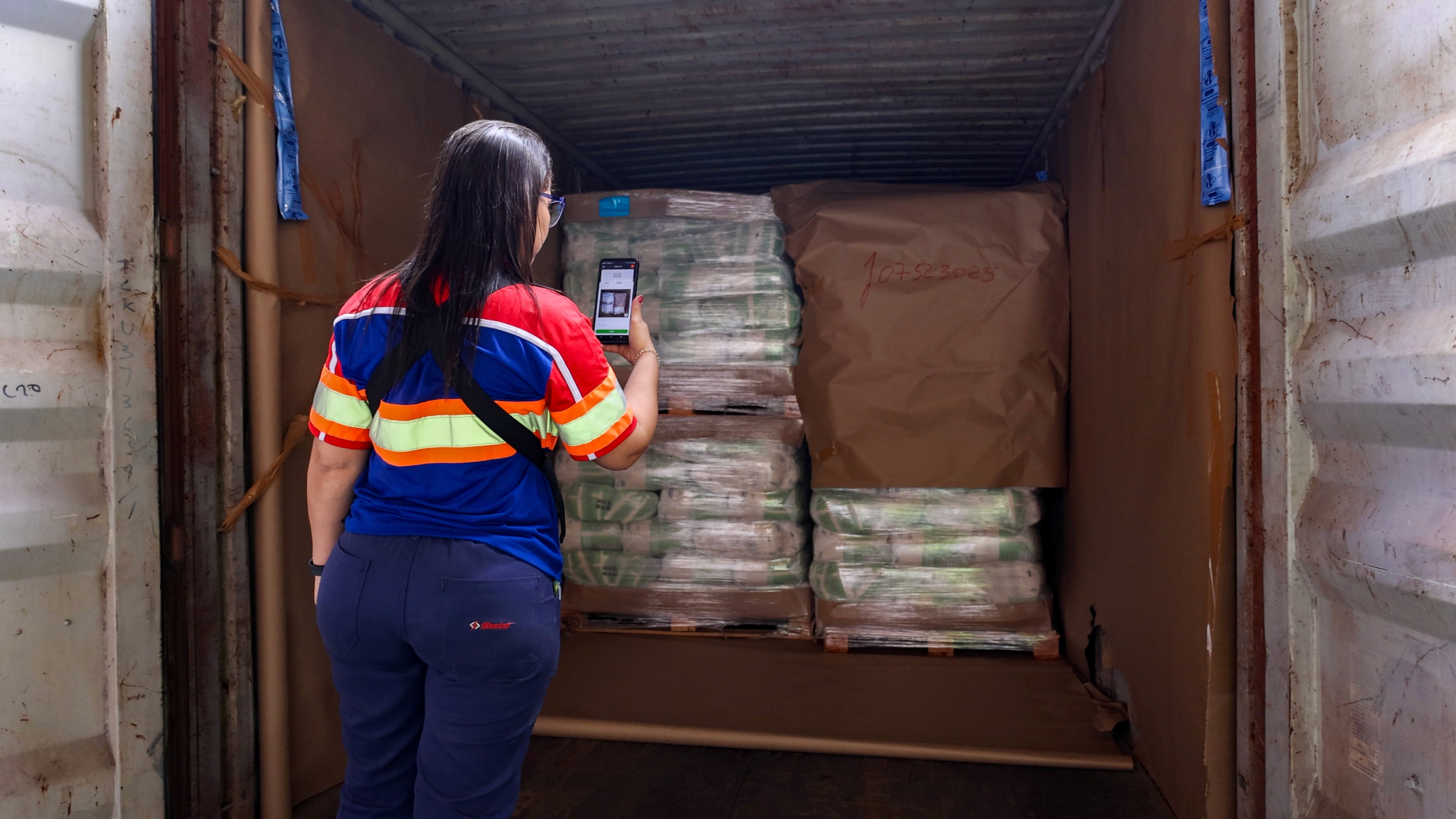
Dedicated inspection documentation software. Built specifically to close these gaps: a standardized shot list every inspector follows, automatic timestamping and geotagging at capture, evidence tied directly to a shipment or reference ID, centralized and searchable storage, and reports that export in the format an auditor or customer actually wants to see.
None of these is disqualified by regulation. You can, in principle, pass an ISO or GDP audit with a well-run paper system. In practice, the cost of "well-run" scales badly with headcount and site count, which is why most teams that inspect goods at any real volume eventually move the evidence-capture step into dedicated software, even if the report-building or filing stays manual for a while longer.
What to look for in a solution
Whichever approach you're evaluating, a few criteria matter more than the others for regulatory compliance specifically:
Timestamp and metadata captured automatically, not typed in by hand after the fact
A standard capture process that doesn't vary by inspector, site, or how busy the day is
Evidence tied to a shipment, batch, or reference ID, not stored loose and matched up later
Central, searchable storage that survives an individual employee leaving
Exportable, audit-ready reports — ideally in one click, not an afternoon of copy-paste
A defined retention policy that matches the legal requirement for your industry, with records genuinely retrievable throughout that period
Where Cargosnap fits in
Cargosnap was built around exactly this gap: standardizing how incoming inspection photos are captured, timestamping and storing them automatically against the shipment record, and generating audit-ready reports without manual assembly. If you're currently relying on WhatsApp, personal phones, or a spreadsheet to hold this evidence together, that's usually the first thing worth fixing — regardless of which specific regulation you're documenting against. You can see how it works here.