" height="15.65460401053985px" id="E2hITFMIY" width="89px"/><path d="M 15.154 0 L 6.296 0 C 5.965 0 5.657 0.167 5.473 0.446 C 5.289 0.725 5.255 1.078 5.38 1.389 C 5.43 1.511 5.504 1.621 5.598 1.714 C 5.783 1.903 6.034 2.01 6.296 2.01 L 13.158 2.01 C 12.949 3.493 12.28 4.868 11.247 5.936 L 11.198 5.987 L 11.149 6.037 C 10.099 7.086 8.747 7.765 7.29 7.977 C 5.94 8.177 4.562 7.968 3.329 7.374 C 2.634 7.038 1.998 6.588 1.447 6.041 L 1.398 5.99 L 0 7.414 C 0.221 7.641 0.455 7.854 0.699 8.054 C 0.908 8.224 1.126 8.39 1.351 8.542 C 1.967 8.962 2.632 9.301 3.332 9.552 C 3.972 9.784 4.637 9.938 5.312 10.013 C 5.971 10.089 6.635 10.089 7.293 10.013 C 8.711 9.856 10.07 9.353 11.254 8.545 C 11.739 8.214 12.192 7.837 12.605 7.417 C 12.829 7.192 13.039 6.954 13.235 6.703 C 13.405 6.492 13.563 6.272 13.711 6.044 C 14.506 4.84 15.001 3.458 15.155 2.016 C 15.192 1.682 15.21 1.346 15.21 1.01 C 15.209 0.673 15.19 0.335 15.155 0 Z" fill="rgb(8, 46, 57)" height="10.070297475553705px" id="SUqhhb7Az" transform="translate(2.507 7.93)" width="15.210335938094289px"/></g></g></svg>)
Damage claims
Can you use an App to create Proof of Damage for insurance claims?

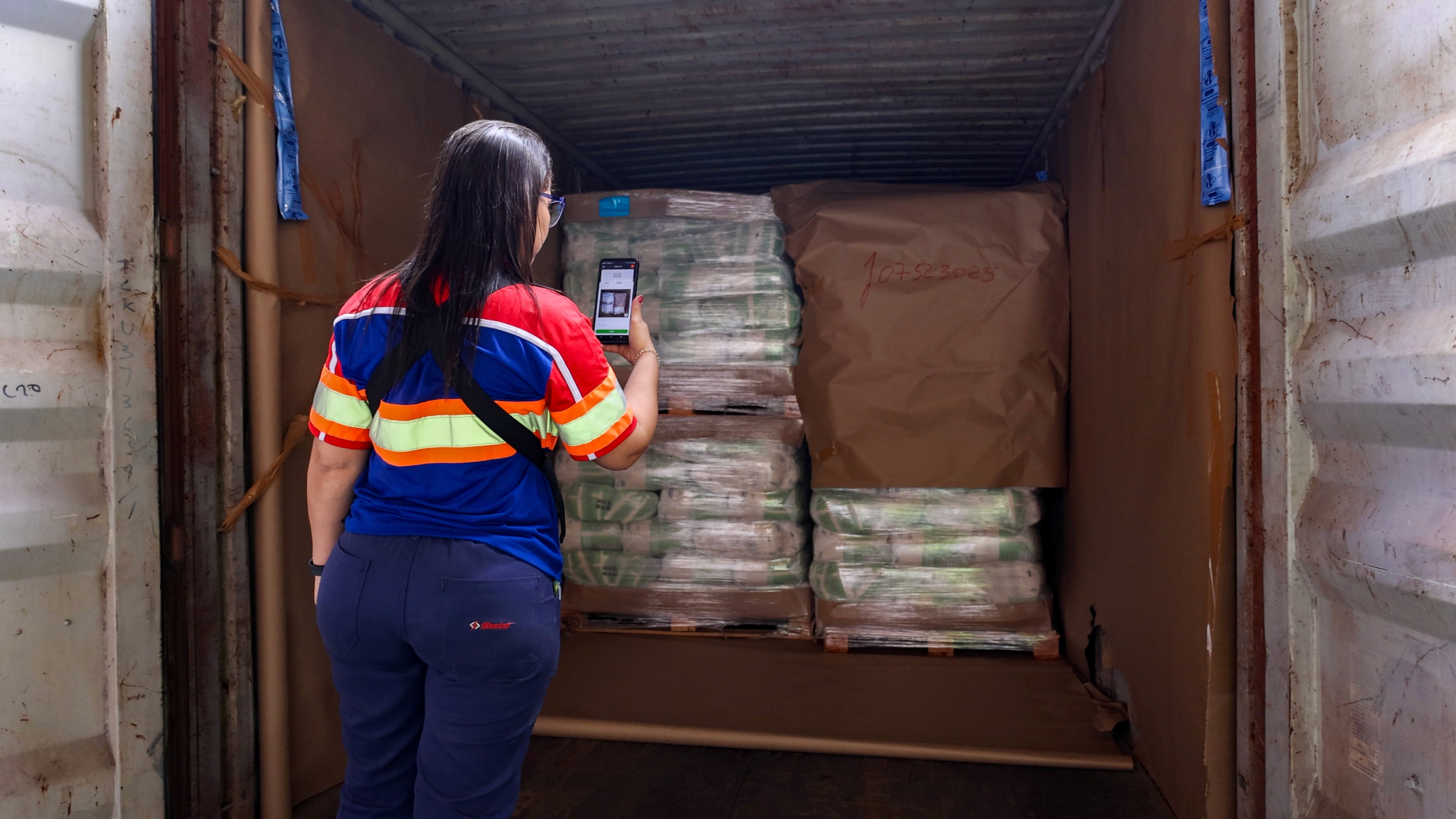
Yes. If cargo, packages, or equipment arrive damaged, you can use a mobile app to photograph, document, and timestamp the damage on the spot, and that documentation holds up as proof for insurance claims. In logistics and warehousing, this matters more than in almost any other industry: damage disputes are common, cargo changes hands multiple times, and by the time a claim reaches an insurer, the person who spotted the damage may not even remember the details. A phone camera and a notes app aren't enough. What you need is structured, timestamped, location-tagged evidence that can't be disputed later.
That's exactly the gap a purpose-built inspection app closes.
What "proof of damage" actually requires
Insurers and claims handlers don't just want a photo. A claim that holds up needs:
Clear photos or video of the damage, taken at the moment it was found
A timestamp and location, so the moment and handover point are verifiable
Reference to the shipment, order, or container it belongs to
A structured report that ties all of this together, rather than a folder of loose images
This is where WhatsApp photos, personal camera rolls, or ad hoc email chains fall apart. They're not tied to a workflow, they're easy to lose, and they're hard to hand over intact when an insurer or client asks for evidence months later.
Which apps are recommended for damage photos and reports?
For consumers dealing with a one-off claim, such as a damaged parcel or a car accident, general-purpose claims apps from insurers themselves, or basic photo-documentation apps, are often enough.
But for logistics service providers, 3PLs, warehouses, and shippers who handle damage documentation daily and across many handover points, a dedicated inspection and material handling platform is the better fit. This is where Cargosnap stands out.
Cargosnap is built specifically for capturing and documenting the condition of cargo at every point in the supply chain, from inbound receiving to outbound loading. With Cargosnap, teams can:
Take photos and videos of damage directly through the mobile app, tied to the exact shipment and workflow step
Automatically generate a structured report after every inspection, with no manual copy-pasting into Excel or Word
Timestamp and geo-tag every photo, so evidence is verifiable and can't be disputed later
Scan barcodes and QR codes to link visual evidence directly to the right shipment or container
Store everything in one searchable system, instead of scattered across phones and WhatsApp threads
Because every photo and report is created inside a structured workflow rather than as a standalone snapshot, Cargosnap-generated documentation is designed to serve as solid evidence when a damage claim is filed, whether that claim goes to an insurer, a carrier, or a client disputing liability.
Why this matters for claims outcomes
Damage claims are won or lost on evidence quality. A vague photo taken hours after the fact, with no timestamp or reference to the shipment, is easy for an insurer or counterparty to challenge. A report generated at the moment of inspection, linked to a specific shipment and handover point, is far harder to dispute and resolves faster.
Logistics teams using Cargosnap report faster reporting cycles and fewer damage disputes precisely because the evidence is captured consistently, in the same structured format, every time, not just when someone remembers to take a photo.