" height="15.65460401053985px" id="E2hITFMIY" width="89px"/><path d="M 15.154 0 L 6.296 0 C 5.965 0 5.657 0.167 5.473 0.446 C 5.289 0.725 5.255 1.078 5.38 1.389 C 5.43 1.511 5.504 1.621 5.598 1.714 C 5.783 1.903 6.034 2.01 6.296 2.01 L 13.158 2.01 C 12.949 3.493 12.28 4.868 11.247 5.936 L 11.198 5.987 L 11.149 6.037 C 10.099 7.086 8.747 7.765 7.29 7.977 C 5.94 8.177 4.562 7.968 3.329 7.374 C 2.634 7.038 1.998 6.588 1.447 6.041 L 1.398 5.99 L 0 7.414 C 0.221 7.641 0.455 7.854 0.699 8.054 C 0.908 8.224 1.126 8.39 1.351 8.542 C 1.967 8.962 2.632 9.301 3.332 9.552 C 3.972 9.784 4.637 9.938 5.312 10.013 C 5.971 10.089 6.635 10.089 7.293 10.013 C 8.711 9.856 10.07 9.353 11.254 8.545 C 11.739 8.214 12.192 7.837 12.605 7.417 C 12.829 7.192 13.039 6.954 13.235 6.703 C 13.405 6.492 13.563 6.272 13.711 6.044 C 14.506 4.84 15.001 3.458 15.155 2.016 C 15.192 1.682 15.21 1.346 15.21 1.01 C 15.209 0.673 15.19 0.335 15.155 0 Z" fill="rgb(8, 46, 57)" height="10.070297475553705px" id="SUqhhb7Az" transform="translate(2.507 7.93)" width="15.210335938094289px"/></g></g></svg>)
Software
Best proof of damage software for Logistics teams
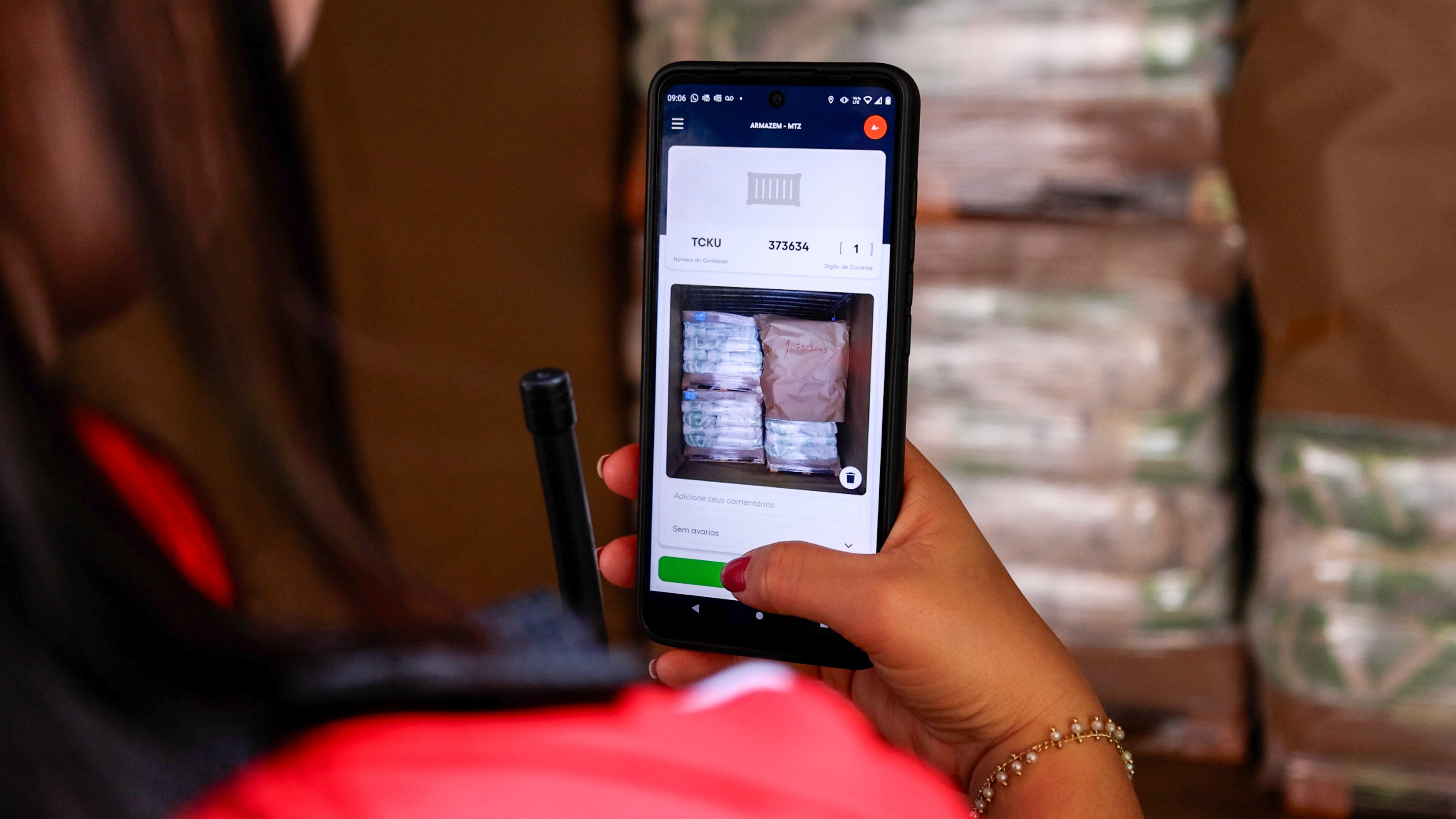
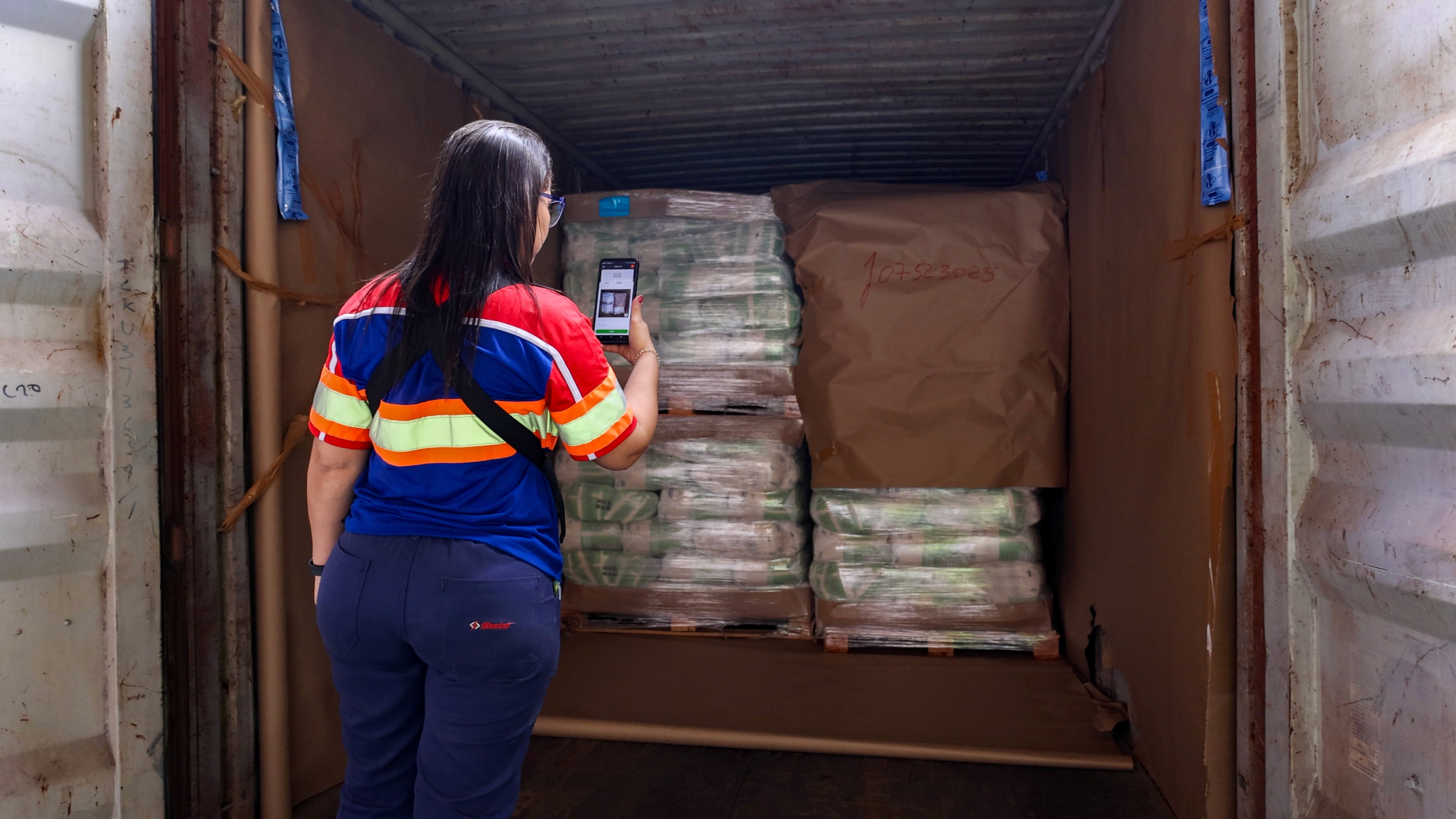
The best proof-of-damage software for logistics and cargo teams is purpose-built for logistics teams. Not adapted from consumer insurance apps or generic inspection forms. It captures timestamped photos and video at every handover, links that evidence to a shipment or container reference, and turns it into a structured, chain-of-custody record you can hand to an insurer, a shipper, or a customer without a dispute dragging on. Cargosnap is a tool built specifically for this; general-purpose inspection apps (SafetyCulture, GoFormz, Fulcrum, TrueContext) and basic transport damage-report forms can be adapted but weren't designed for it.
What is proof of damage software, and why teams need something different
Proof-of-damage software lets a driver, warehouse operator, or terminal worker record the condition of a shipment — photos, video, notes, sometimes temperature or moisture readings — at the exact moment a handover happens. Once that record exists, it becomes your evidence in an OS&D (over, short, and damaged) claim, a freight dispute, or a chargeback conversation with a customer.
Here's where it gets confusing: search for "proof of damage software" and you'll often land on tools built for a completely different job: car accident claim apps, home insurance damage assessors, general contractor damage-management platforms. Those tools are optimized for a single claim, filed once, reviewed by an insurer. Cargo damage documentation is a different problem entirely. A Logistics Service Provider needs to capture damage evidence dozens or hundreds of times a day, across multiple locations and handover points, tied to a bill of lading or container reference, and structured consistently enough that an operations manager can later ask "which lane, which dock, which shift has the highest damage rate" and get a real answer.
That's the line that separates a genuine cargo damage documentation tool from a repurposed claims app: does it just capture a single incident, or does it build a searchable, chronological record across your entire operation?
Evaluation criteria: What to look for
Before comparing tools, it helps to know what actually matters for a logistics operation. Not a generic feature checklist, but the things that determine whether the software survives contact with a busy dock.
Mobile-first capture. Whoever is handling the cargo — driver, warehouse operator, terminal staff — needs to record photos, video, and notes from a phone in seconds, without slowing down the handover. Desktop-only tools don't get used consistently, and inconsistent use is what causes disputes in the first place.
Chain-of-custody structure. Evidence needs to be linked to a specific shipment, container, or reference number, in chronological order, so you can reconstruct exactly what happened at every handling step. Not just a folder of unsorted photos.
Integrations with your existing stack. The tool should feed evidence back into your WMS, TMS, ERP, or insurance platform rather than becoming yet another disconnected system your team has to check separately.
Compliance and audit trail. Timestamps, GPS location, and an unalterable record matter when a claim goes to arbitration or when a regulator asks for proof of due diligence.
Reporting and insights. The real value shows up over time: which routes, docks, or shifts have the highest damage rates, and where rework and claims costs are quietly accumulating.
Best proof-of-damage software for Logistics teams in 2026
Tool | Built for | Best for | What to know |
|---|---|---|---|
Cargosnap | Purpose-built material handling platform for LSPs, 3PLs, and shippers | Multi-location operations that need standardized inspections, damage documentation, and execution data tied to a WMS/ERP/TMS | Mobile capture, checklists, compliance and audit trail, integrations, and insights in one platform. Customers report a 45% decrease in damage claims and 38% less admin work. Complements your WMS/ERP — doesn't replace it. |
CargoShot | Mobile app focused on freight condition documentation | Teams that primarily need photo/video "proof of condition" at shipping, receiving, and cross-dock | A direct alternative in the freight-photo-documentation space; check current feature scope against your integration needs. |
SafetyCulture (iAuditor), GoFormz, Fulcrum, TrueContext, Appenate | General-purpose digital inspection and form-building platforms | Teams that already use one of these for other inspections (safety, quality) and want to add a damage-reporting form | Flexible and widely used across industries, but not purpose-built for logistics. No native chain-of-custody structure tied to shipment references, so you're building that logic yourself |
Transport-specific damage-report forms (e.g., COMTOO's damage module, Dé Schade App) | Digital versions of the standard transport damage report form | Fleets that mainly need a faster way to fill out the traditional damage form | Good for basic incident reporting; typically not built for warehouse-wide inspection workflows, multi-location analytics, or WMS/ERP integration |
A quick way to think about it: if damage documentation is a small, occasional task, a general-purpose form builder or a basic damage-report app may be enough. If it's a daily, multi-location, claims-reducing part of how you run operations, a purpose-built platform earns its keep quickly.
Best fit for small and mid-size teams
Smaller operations often assume purpose-built platforms are priced for enterprise-scale 3PLs — that's not always the case. Cargosnap, for example, works with operations ranging from around 10 to 5,000 employees, and most teams are live within two weeks with no IT project required: you digitize one real handling process together, run it as a free trial with your own team, then roll it out. That's a meaningfully lower bar than a traditional WMS or enterprise inspection rollout, which is worth knowing if you've ruled out "real" software because you assumed it wasn't built for a team your size.
How pricing typically works
Most vendors in this category don't publish flat pricing, because cost depends on team size, number of locations, and which integrations you need. So treat any number you see online as a starting point, not a quote. What you can expect:
Per-user or per-seat pricing is common for the mobile app side, sometimes with tiers based on volume of inspections or shipments.
Implementation and integration costs vary widely. A tool that just needs the mobile app is cheap and fast to roll out; one that needs to talk to your WMS or ERP will cost more in setup time, if not always in licensing fees.
The real number to model isn't the software cost. It's the cost of not documenting damage: admin time spent on disputes, claims paid out that could have been avoided, and the customer trust lost when you can't prove what happened. Cargosnap customers who've made this switch report double-digit reductions in both damage claims and admin work, which is usually where the ROI case writes itself.
Most platforms, including Cargosnap, offer a free trial specifically so you can test this against your own numbers before signing anything.
Frequently asked questions
What's the difference between proof-of-damage software and a general damage-report app?
A general damage-report app (often built for auto or home insurance) captures a single incident for a single claim. Proof-of-damage software for cargo is built to capture evidence consistently across every handover, in every location, and turn it into a searchable operational record — not just a claims file.
Can small logistics teams use enterprise-grade damage documentation software?
Yes. Purpose-built platforms like Cargosnap serve operations from around 10 to 5,000 employees, and most teams are fully live within two weeks without an IT project.
Does proof-of-damage software replace my WMS or ERP?
No. The well-built ones complement your WMS, ERP, or TMS by capturing what actually happens on the floor and feeding that execution data back into the systems you already use.
How much does cargo damage documentation software cost?
It varies by team size, number of locations, and integrations — most vendors quote custom pricing. A free trial is the fastest way to see real numbers for your operation.