" height="15.65460401053985px" id="E2hITFMIY" width="89px"/><path d="M 15.154 0 L 6.296 0 C 5.965 0 5.657 0.167 5.473 0.446 C 5.289 0.725 5.255 1.078 5.38 1.389 C 5.43 1.511 5.504 1.621 5.598 1.714 C 5.783 1.903 6.034 2.01 6.296 2.01 L 13.158 2.01 C 12.949 3.493 12.28 4.868 11.247 5.936 L 11.198 5.987 L 11.149 6.037 C 10.099 7.086 8.747 7.765 7.29 7.977 C 5.94 8.177 4.562 7.968 3.329 7.374 C 2.634 7.038 1.998 6.588 1.447 6.041 L 1.398 5.99 L 0 7.414 C 0.221 7.641 0.455 7.854 0.699 8.054 C 0.908 8.224 1.126 8.39 1.351 8.542 C 1.967 8.962 2.632 9.301 3.332 9.552 C 3.972 9.784 4.637 9.938 5.312 10.013 C 5.971 10.089 6.635 10.089 7.293 10.013 C 8.711 9.856 10.07 9.353 11.254 8.545 C 11.739 8.214 12.192 7.837 12.605 7.417 C 12.829 7.192 13.039 6.954 13.235 6.703 C 13.405 6.492 13.563 6.272 13.711 6.044 C 14.506 4.84 15.001 3.458 15.155 2.016 C 15.192 1.682 15.21 1.346 15.21 1.01 C 15.209 0.673 15.19 0.335 15.155 0 Z" fill="rgb(8, 46, 57)" height="10.070297475553705px" id="SUqhhb7Az" transform="translate(2.507 7.93)" width="15.210335938094289px"/></g></g></svg>)
Wholesale
How Lekkerland Netherlands optimized their inspection processes with Cargosnap

About
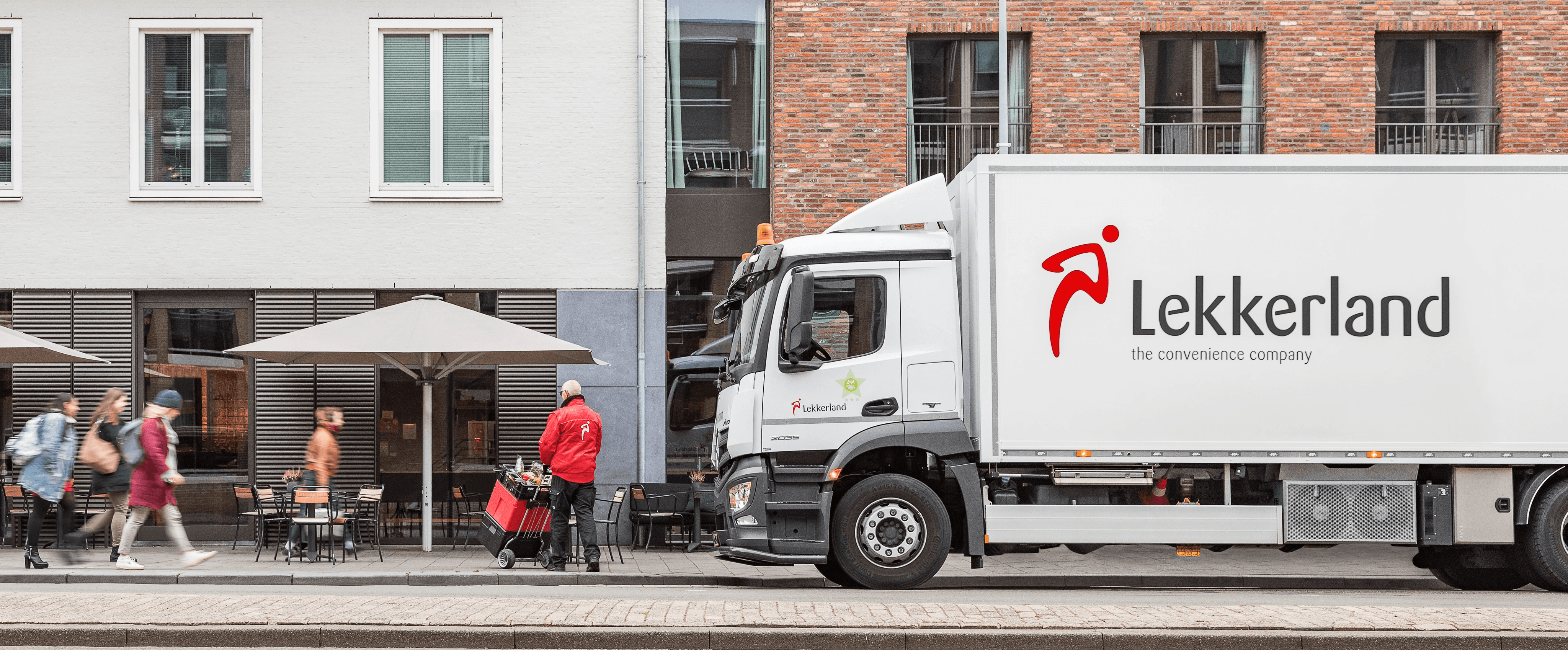
Lekkerland Netherlands delivers to around 85,800 sales points across four countries, service stations, convenience stores, kiosks, bakeries, and quick-service restaurants. Part of the REWE Group, they operate tailor-made logistics at scale. At that scale, delivery deviations are inevitable. What should not be inevitable is spending hours trying to prove what happened.
Industry
Wholesale
Company size
501-1,000 employees
Founded
1956
Share
The challenge
When a delivery deviation occurred at Lekkerland, the investigation that followed had a structural problem. The person who reported the claim was on the operational site. The person who followed it up worked at the head office. By the time the follow-up began, the handling moment that caused the deviation was already gone — no structured record, no timestamped evidence, no reference point both parties could look at together.
What remained was a chain of follow-up emails, manual spreadsheet entries, and internal and external discussions that consumed time without producing resolution. Paul, Logistics Engineer, describes it directly: someone reported the claim on the ground, someone else followed it up remotely with less detailed knowledge of what the inspection actually involved.
Without material handling visibility, the only tool available when something goes wrong is memory — which is neither structured, nor searchable, nor convincing to a supplier who disputes the claim.
Our approach
Lekkerland needed a way to make the handling moment survive beyond the moment itself. Not a reporting tool. Not a claims management system. A structured record created at the point of handling: timestamped, referenced, and accessible to anyone in the organisation regardless of where they sit.
The focus was specifically on the deviation workflow: capturing what was found, when it was found, by whom, and against which delivery reference, so that the follow-up conversation had a shared factual foundation rather than two parties reconstructing events from memory.

A coworker reported cargo claims at the operational site. However, they were followed up by someone else at the head office, who had less detailed knowledge of the inspection.
Paul van Gorp
Logistics Engineer
The solution
When Lekkerland adopted Cargosnap in March 2021, every deviation was documented at the moment it was found. Timestamped, photographed, and stored against a unique reference number. Paul describes what this created: an overview of negative inspections with a specific date, time, and reference for each one.
That reference number changed how follow-up worked. The supplier receives the same structured record the operational team captured on site. The discussion moves from "what happened" to "here is what happened." Internal escalations drop because the evidence is already there. External disputes shorten because both parties are looking at the same timestamped record rather than arguing from different recollections.
The effect extended beyond the team. Deviations are now communicated efficiently with suppliers, and customers benefit from a logistics process that resolves problems quickly rather than escalating them.
The results
What Lekkerland documented is operational: a significant reduction in rework and miscommunication, the elimination of manual spreadsheet handling for deviation data, and a consistent process that now works across both the operational site and the head office without the information gap that previously existed between them.
The broader effect was felt across the chain. Suppliers receive structured deviation reports instead of disputed claims. Customers benefit from a smoother logistics process. And the team at Lekkerland spends its time on operations rather than on reconstructing what happened after the fact.

The team has an overview of negative inspections on a certain date, time and with a unique reference number. This makes it even easier to follow up.
Paul van Gorp
Logistics Engineer