" height="15.65460401053985px" id="E2hITFMIY" width="89px"/><path d="M 15.154 0 L 6.296 0 C 5.965 0 5.657 0.167 5.473 0.446 C 5.289 0.725 5.255 1.078 5.38 1.389 C 5.43 1.511 5.504 1.621 5.598 1.714 C 5.783 1.903 6.034 2.01 6.296 2.01 L 13.158 2.01 C 12.949 3.493 12.28 4.868 11.247 5.936 L 11.198 5.987 L 11.149 6.037 C 10.099 7.086 8.747 7.765 7.29 7.977 C 5.94 8.177 4.562 7.968 3.329 7.374 C 2.634 7.038 1.998 6.588 1.447 6.041 L 1.398 5.99 L 0 7.414 C 0.221 7.641 0.455 7.854 0.699 8.054 C 0.908 8.224 1.126 8.39 1.351 8.542 C 1.967 8.962 2.632 9.301 3.332 9.552 C 3.972 9.784 4.637 9.938 5.312 10.013 C 5.971 10.089 6.635 10.089 7.293 10.013 C 8.711 9.856 10.07 9.353 11.254 8.545 C 11.739 8.214 12.192 7.837 12.605 7.417 C 12.829 7.192 13.039 6.954 13.235 6.703 C 13.405 6.492 13.563 6.272 13.711 6.044 C 14.506 4.84 15.001 3.458 15.155 2.016 C 15.192 1.682 15.21 1.346 15.21 1.01 C 15.209 0.673 15.19 0.335 15.155 0 Z" fill="rgb(8, 46, 57)" height="10.070297475553705px" id="SUqhhb7Az" transform="translate(2.507 7.93)" width="15.210335938094289px"/></g></g></svg>)
Best practices
How to document cargo damage during receiving
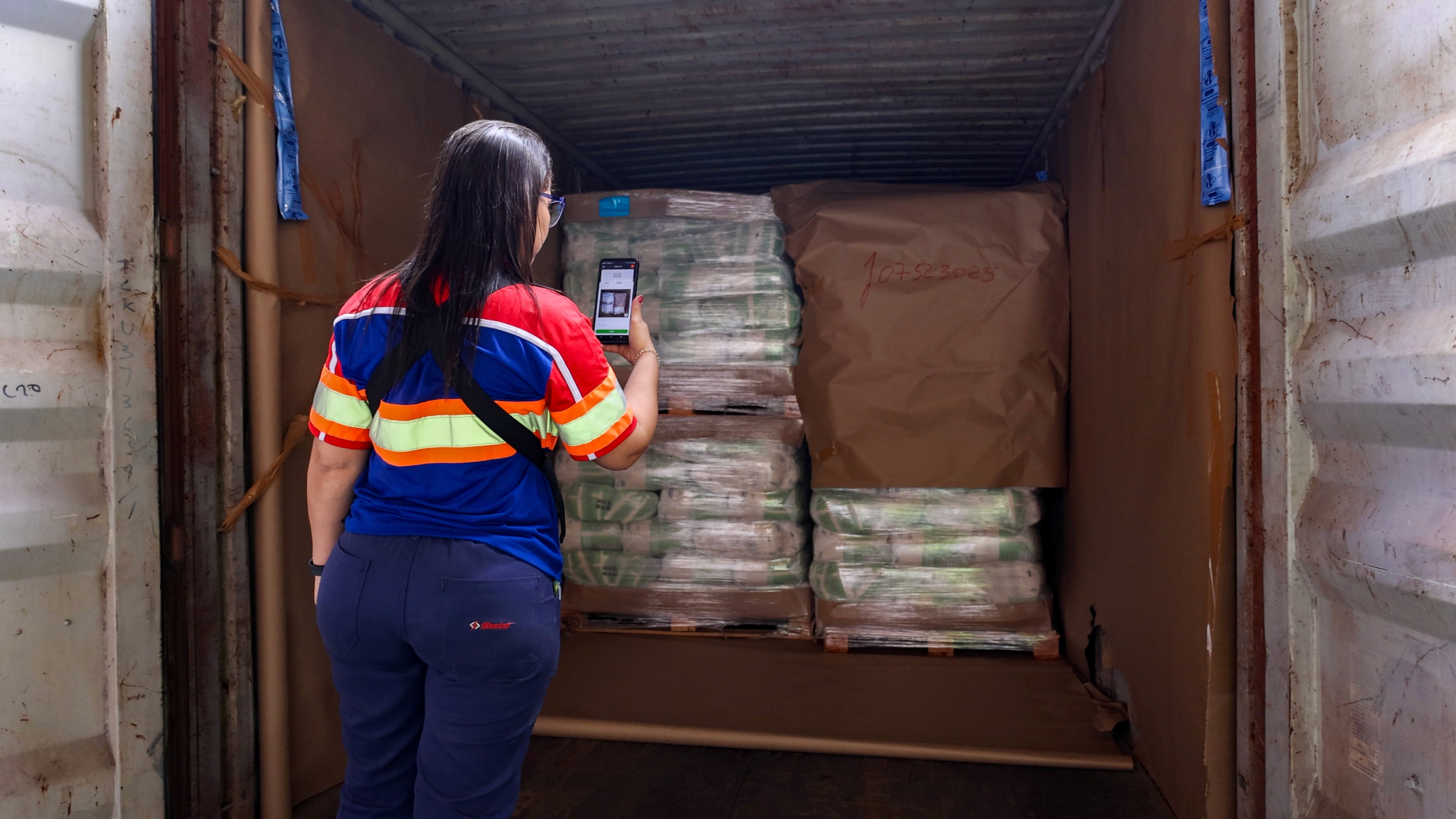
Documenting cargo damage during receiving is one of the most important steps for protecting your operation against claims, disputes, and unnecessary costs. The key is to capture what you see, when you see it, before the cargo moves further into the process.
Below is a simple, field-tested way to do it right.
Why documenting damage at receiving matters
Most cargo damage claims fail for one reason: there is no clear proof of condition at the moment of handover.
Once the cargo is unloaded, stored, or repacked, it becomes hard to prove:
When the damage occurred
What the condition was on arrival
Who was responsible at that point in time
Good documentation turns assumptions into facts.
Step-by-step: how to document cargo damage during receiving
1. Inspect immediately at unloading
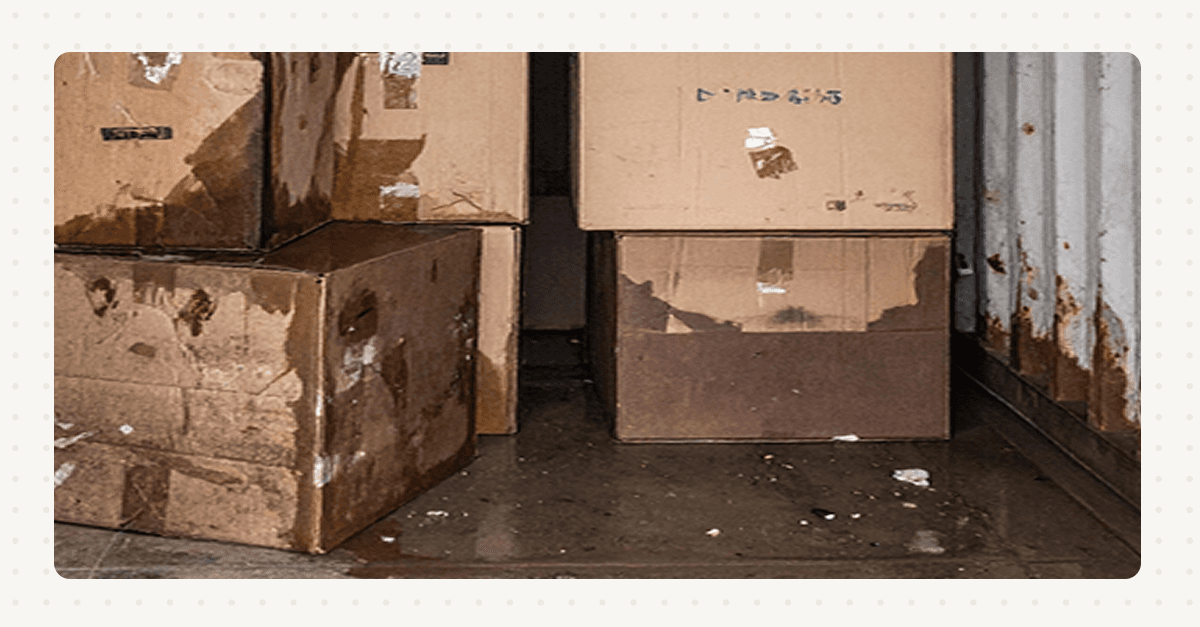
Check cargo as it is being unloaded, not later. Look for:
Broken or crushed packaging
Wet, stained, or torn cartons
Shifted or unstable pallets
Visible product damage
2. Take clear photos
Photos are the strongest form of proof. Make sure to capture:
The damaged area (close-up)
The full pallet or item (context)
Container or truck interior if relevant
Seals, labels, and shipment references
Photos should be taken before repacking or moving the cargo.
3. Record time, place, and shipment details
Always link damage to the exact receiving moment:
Date and time of inspection
Location (dock, warehouse, terminal)
Shipment or container number
Delivery or booking reference
4. Describe the damage clearly
Use short, factual descriptions. Avoid assumptions.
Example:
“Two cartons crushed on lower left corner of pallet. Packaging torn. Product inside exposed.”
5. Flag the damage immediately
Make sure the damage is:
Noted in the receiving record
Communicated internally (Ops / Claims / Customer Service)
Reported before the cargo continues downstream
Common mistakes to avoid
Taking photos after repacking
Missing timestamps or shipment references
Relying on memory instead of documentation
Start documenting cargo damage today
To make this easier on the floor, we’ve put together a simple cargo damage documentation template that operators can use during receiving to capture photos, notes, timestamps, and shipment details in one place.