" height="15.65460401053985px" id="E2hITFMIY" width="89px"/><path d="M 15.154 0 L 6.296 0 C 5.965 0 5.657 0.167 5.473 0.446 C 5.289 0.725 5.255 1.078 5.38 1.389 C 5.43 1.511 5.504 1.621 5.598 1.714 C 5.783 1.903 6.034 2.01 6.296 2.01 L 13.158 2.01 C 12.949 3.493 12.28 4.868 11.247 5.936 L 11.198 5.987 L 11.149 6.037 C 10.099 7.086 8.747 7.765 7.29 7.977 C 5.94 8.177 4.562 7.968 3.329 7.374 C 2.634 7.038 1.998 6.588 1.447 6.041 L 1.398 5.99 L 0 7.414 C 0.221 7.641 0.455 7.854 0.699 8.054 C 0.908 8.224 1.126 8.39 1.351 8.542 C 1.967 8.962 2.632 9.301 3.332 9.552 C 3.972 9.784 4.637 9.938 5.312 10.013 C 5.971 10.089 6.635 10.089 7.293 10.013 C 8.711 9.856 10.07 9.353 11.254 8.545 C 11.739 8.214 12.192 7.837 12.605 7.417 C 12.829 7.192 13.039 6.954 13.235 6.703 C 13.405 6.492 13.563 6.272 13.711 6.044 C 14.506 4.84 15.001 3.458 15.155 2.016 C 15.192 1.682 15.21 1.346 15.21 1.01 C 15.209 0.673 15.19 0.335 15.155 0 Z" fill="rgb(8, 46, 57)" height="10.070297475553705px" id="SUqhhb7Az" transform="translate(2.507 7.93)" width="15.210335938094289px"/></g></g></svg>)
AI
Why execution data is the foundation of AI in the warehouse?
Everyone in logistics is talking about AI. Warehouse automation, predictive analytics, intelligent routing, demand forecasting. The promises are real and the technology is maturing fast.
But there's a conversation that isn't happening enough: AI is only as good as the data you feed it.
And in most warehouses, the data that matters most - what actually happens during loading, unloading, inspections, and handovers - isn't being captured properly.
The gap between systems and reality
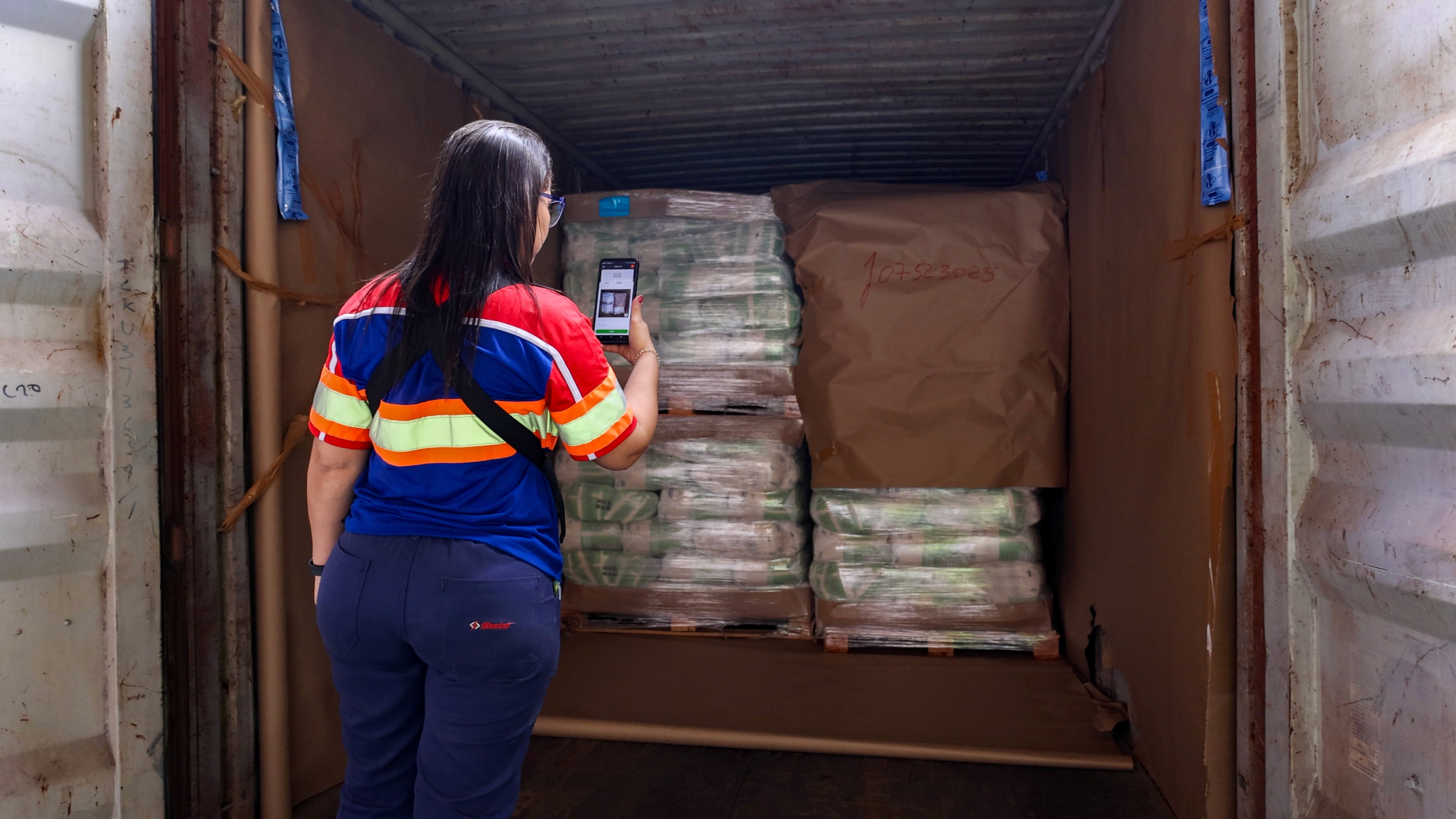
ERPs and WMSs are good at tracking what should happen. Orders, inventory levels, planned movements. But what actually happens on the warehouse floor often lives outside the system. In a photo on someone's phone. In a WhatsApp message. In a verbal confirmation that nobody wrote down.
This is the execution gap. And it's where most warehouse data strategies break down before they even start.
What this means for AI
If you're planning to implement AI in your warehouse operations, whether that's damage prediction, claims automation, or operational optimisation, the first question isn't which AI tool to buy. It's whether your execution data is structured, timestamped, and traceable enough to be useful.
Unstructured data doesn't train models. It creates noise. And AI built on noisy data doesn't optimise your operation. It amplifies the problems already in it.
The prerequisite nobody talks about
Before AI, you need structured execution data. Before structured execution data, you need a consistent process for capturing what happens at every handover point in your operation.
That means photos with timestamps. Condition reports at loading and unloading. Digital checklists that create a traceable record rather than a paper trail that disappears.
This isn't a technology problem. It's a process problem that technology can solve, but only if you address it before trying to layer AI on top.
The warehouses that will benefit most from AI in the next five years aren't the ones investing in AI today. They're the ones investing in execution data quality today.